

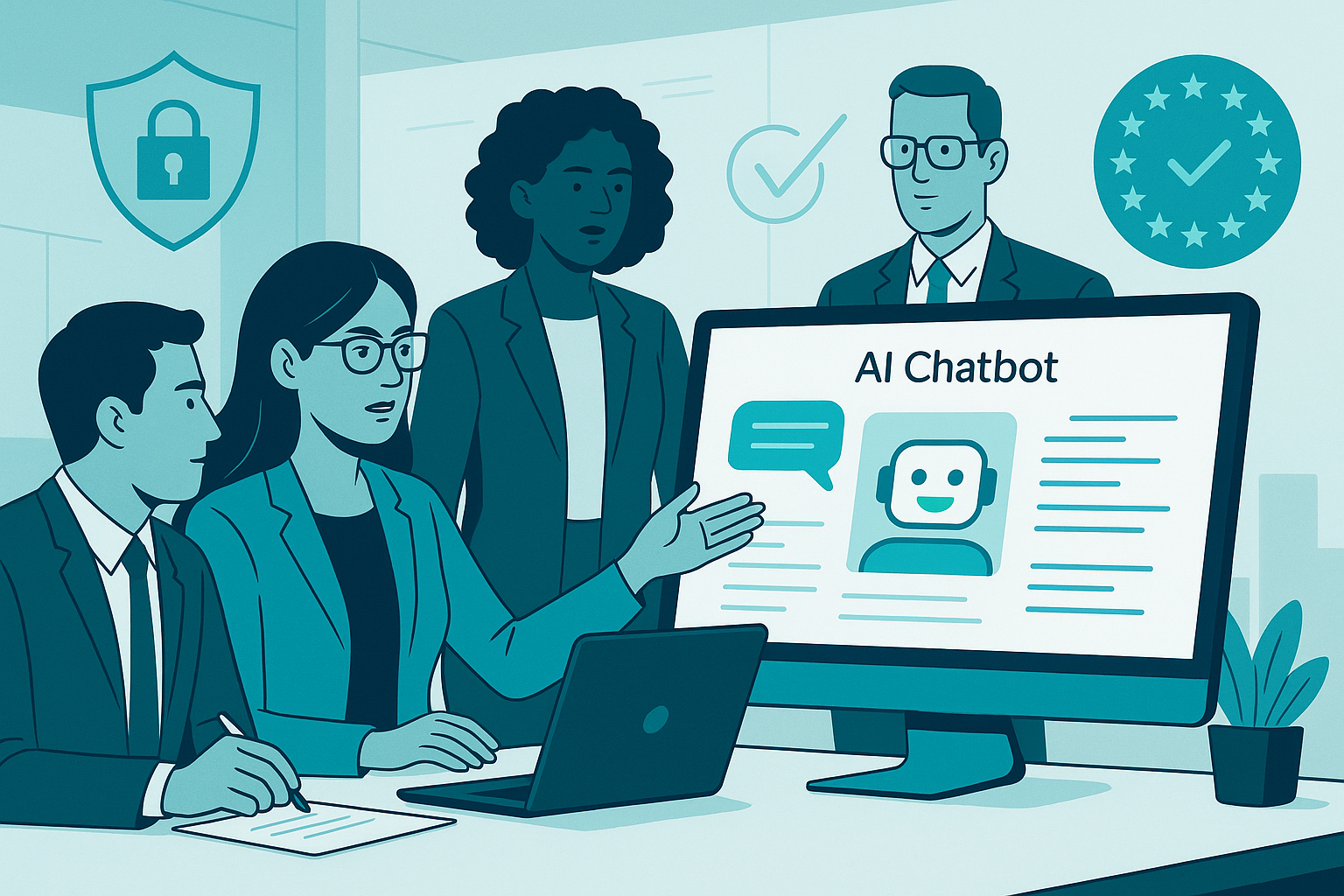
Wie Sie KI-Chatbots in Ihrem Unternehmen einsetzen - und rechtskonform sind

November 23, 2026

AI-powered chatbots, whether developed in-house or deployed through trusted platforms, are revolutionizing customer service, knowledge access, and internal communication.
However, alongside these opportunities come new legal obligations:
data protection, transparency, and EU AI Act compliance must be addressed carefully.


This article covers:

  • Where AI chatbots bring business value
  • What compliance risks you must manage
  • How to implement AI chatbots successfully and securely

Why Chatbots Matter in 2025

Customer expectations have evolved. People expect instant responses, while businesses aim for efficiency and scale.

Chatbots meet both goals – if implemented right.


Key benefits:

  • 24/7 service availability
  • Reduced manual work
  • Scalable support without growing headcount
  • Personalized replies via LLMs

Source: IBM Research (2024): Chatbots increase customer satisfaction by 25% and reduce operational costs by up to 30%.
Typical Use Cases for AI Chatbots


Effective chatbot deployment starts with clear use cases. Whether as customer assistant, HR bot or knowledge manager – options are vast.


  • Customer service: FAQs, troubleshooting
  • Lead generation: Engaging website visitors
  • HR & recruiting: Applications, interview scheduling
  • Internal support: Policy lookup, onboarding help
  • Sales & e-commerce: Product advice and returns


Business Benefits of Customized AI Chatbots

Custom AI chatbots offer more than automation – they deliver tangible value by streamlining operations and increasing user satisfaction.


✅ Scalable automation of communication
✅ Faster information for employees and customers
✅ Better service with fewer resources
✅ Innovation through tailored tech solutions

Legal & Compliance Aspects

Compliance is essential for sustainable chatbot use. Here's what to keep in mind:


a) Transparency

Let users know they’re interacting with a company-managed chatbot.
→ Tip: Add a welcome message (“You’re communicating with an AI assistant developed by our organization.”)


b) Data Minimization

Collect only necessary data and avoid saving sensitive info unnecessarily.


c) Vendor Due Diligence

  • Prefer EU/Swiss-hosted platforms or internal hosting
  • Ensure GDPR/Swiss DPA compliance
  • Clarify data processing in contracts


Checklist:

  • Is data use clearly defined?
  • Can logs be reviewed and deleted?
  • Are ISO 27001 standards supported?


d) EU AI Act Risk Classification

For high-risk systems (e.g. recruitment, finance), specific documentation and risk assessments are mandatory.

The EU AI Act is transforming how businesses approach AI deployment.


Under Article 4, organizations must:


  • Train staff on responsible AI use
  • Document AI-related risks
  • Ensure transparency and human oversight

→ Customized chatbots without these controls risk non-compliance.

💡 Need help creating internal documentation, AI risk assessments, or role definitions?
We support companies with
customized AI Usage Guidelines – structured, ready-to-use, and EU AI Act–compliant.


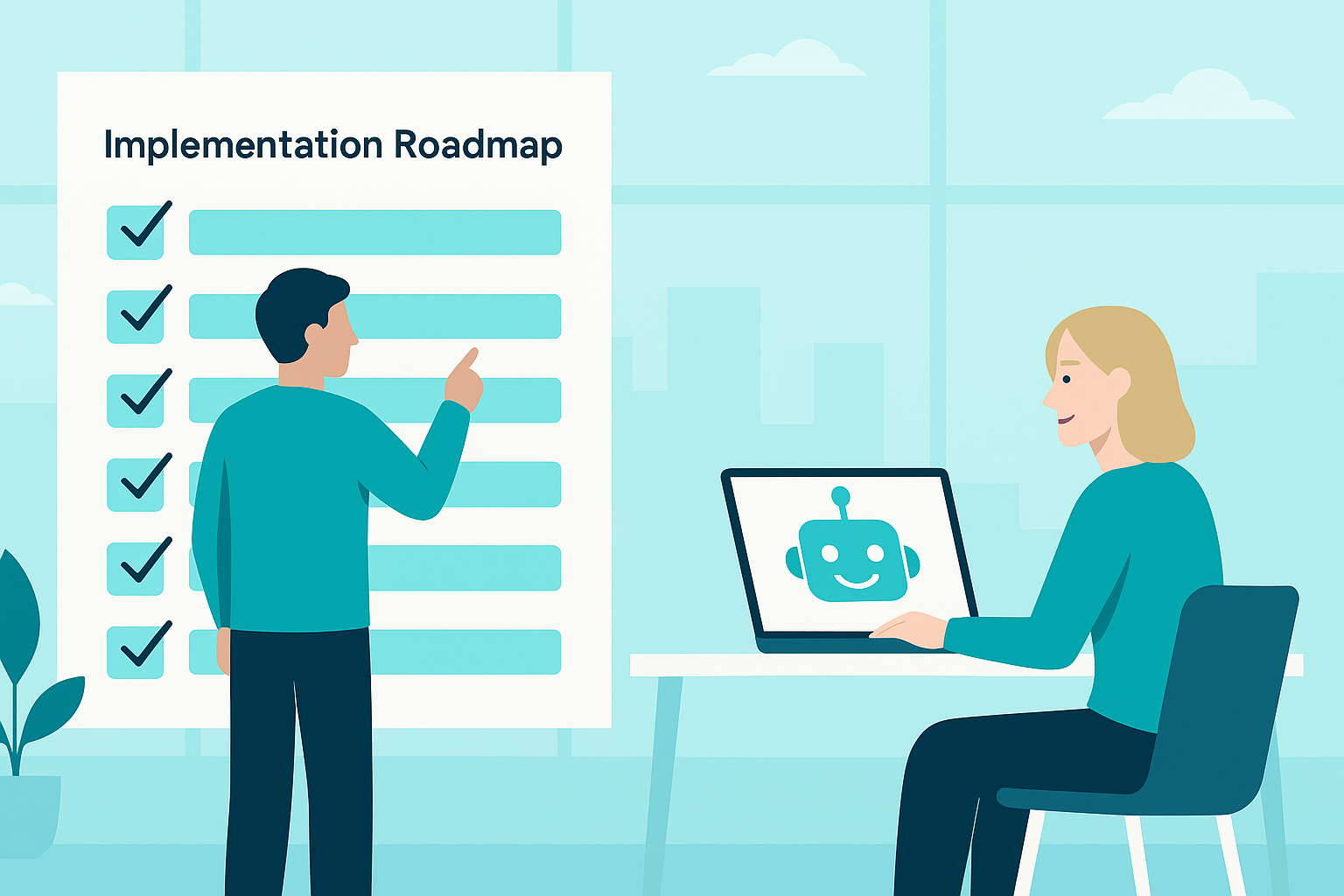
Implementation Roadmap

Start small – but plan thoroughly. These steps will help you launch your customized chatbot securely and efficiently:


  1. Define goals (Which business problem does the bot solve?)
  2. Choose the right development approach (build internally or use a compliant vendor)
  3. Structure content (FAQs, flows, escalation logic)
  4. Ensure legal compliance (GDPR, EU AI Act requirements)
  5. Test and optimize with internal stakeholders
  6. Launch with continuous monitoring and governance


Conclusion

Custom AI chatbots are powerful – but only if implemented responsibly.
Companies with strong AI governance & compliance processes will be more trusted, more efficient, and future-ready.


For technical implementation and governance, we work closely with companies - and, if required, with specialized partners such as LEXR for the legal review and safeguarding of your AI processes.


By Nina Habicht • November 23, 2026
What is the AI Act about? According to the Artificialintelligenceact.eu (https://artificialintelligenceact.eu/about/) in Europe, the Future of Life Institute (FLI) which maintains the AI Act has two key priorities: "i) promote the beneficial development of artificial intelligence and ii) regulate lethal autonomous weapons. FLI works closely with leading AI developers to prepare its policy positions, funds research through recurring grant programs and organises global AI conferences. FLI created one of the earliest sets of AI governance principles – ) the Asilomar AI principles ." What is AI Ethics? AI Ethics is I to train or improve our models, unless you explicitly decide to share your data with us for this purp What does the AI Act mean for humanity? What does the AI Act mean for my company? Which AI Ethics ressources are helpful? My favorite sources are the following: https://montrealethics.ai/blog/ -> great research team
By Nina Habicht • November 23, 2026
Why AI Video creation tools are game-changers? The rise of AI-powered video creation platforms has democratized content creation, enabling individuals and small businesses to produce professional-grade videos quickly and affordably. These tools come with several advantages: Speed: AI accelerates the video production process, reducing editing time significantly. Creativity: AI-powered effects, 3D modeling, and animations help creators achieve complex visuals without technical expertise. Cost-Effectiveness: AI tools reduce the need for expensive software and hardware, making high-quality video production accessible. With that in mind, let’s dive into a comparison of the top four AI video creation platforms.
By Nina Habicht • November 23, 2026
Kids and AI - How Educating Children and Parents is Essential for our Future Kids need to know that AI is essentially changing the way we read, talk, work and how our creative system works. Why AI and especially AI slot can be manipulative and detrimental to the brain has been researched in our AI newsletter on Linkedin: (4) Starting 2026 with Conscious AI: What Happens with our Brain? | LinkedIn . We strongly observe that education is handled different per country and educational system. That's why we want to provide and overview for you.
By Nina Habicht • November 23, 2026
How to tell that your AI project is stuck, where the causes lie and how to get an honest picture of the situation within one week.
By Nina Habicht • September 14, 2026
32% of organisations skipped a software purchase to build with coding agents. Why make-or-buy lost its governance and how to restore it.
By Nina Habicht • January 11, 2026
What is AI Cybersecurity and what is Security for AI? AI cybersecurity is the use of artificial intelligence to protect IT systems, networks, and data from cyber threats. detect attacks and anomalies in logs and traffic, identify phishing, malware, and fraud, prioritize and respond to security incidents faster than humans can.
Show More